



Car Insurance isn’t an unnecessary cost to drivers. But you might pay more than necessary with insufficient knowledge about your options for getting discounts, selecting from multiple policies & ways to save money. By understanding how your insurance company calculates its premiums, you make better decisions that will ultimately reduce the amount of money you spend throughout each year.
Insurance companies take into consideration many factors when determining what a driver will be charged as an annual premium — including a driver’s prior or current driving habits, age, model of car driven, geographical residence, credit background and total coverage required. There are many elements above that can’t be changed; however, the majority have the ability to be improved over time to qualify for lower-priced insurances.
With today’s overall competition among Insurance Companies comes an increasing number of additional products and discounts available; such as discounts for driving safely, technology that utilizes telemetry device(s), customization via Digital Policy Management, all contributing to cost reductions while holding adequate levels of coverage.
Finally, whether you are a new or experienced vehicle operator, understanding how lowering your car insurance premium now – will save you substantial amounts of money in the future. This guide provides the proven steps a driver must take to reduce his/her insurance costs without giving up significant levels of protection.
Understand factors driving premiums
Driving History


Viewing the driver history as an element of premium valuation within a driver’s profile is one of the most significant elements that are used by car insurance carriers for this specific purpose. Insurers will also provide lower premium rates to drivers who have been accident-free, representing a lesser liability for their driver profile, than to drivers who have had accidents in the past.
Type of vehicle
The type of vehicle driven has a significant impact on an insurance company’s cost to obtain coverage for a vehicle. Luxury and sport vehicles that have high replacement and/or repair costs typically have higher premium rates than that of a midsized or compact vehicle, while selecting a dependable vehicle has the potential to lower a driver’s overall insurance cost.
Geographical Location

Insurance carrier-issued premium rates vary dependent upon the geographical area in which a driver resides. Areas that are heavily congested with traffic; have a greater likelihood of experiencing high theft rates and/or have a greater frequency of auto accidents typically result in higher premium rates.
Policy limits
The coverage limit selected by a driver has a direct impact on the amount the driver will need to pay for insurance coverage. While good coverage limits should be maintained, any add on coverages that are not necessary should be evaluated and eliminated, thus resulting in a lower premium.
Credit score & insurance score


Credit-based insurance scores are commonly used by insurance providers to calculate premium cost. When you maintain good financial habits, it should also improve the likelihood of qualifying for lower rated premiums. Therefore, understanding each of the above factors, will allow drivers to identify where (and how) drivers may improve over time and save in the process.
Compare quotes
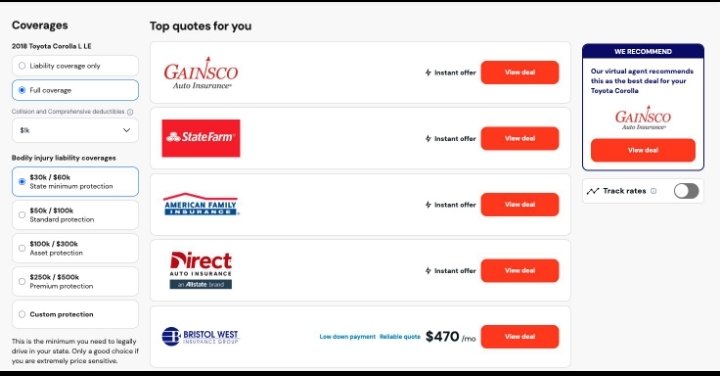
The easiest way to save money on your premium is by comparing multiple insurance quotes. You can often find huge variations in price for identical limits of coverage when you shop around.
Increase your deductible
The higher your deductible, the lower your monthly premium. That said, the deductible must be one that you have the means to pay at the time of filing a claim.
Bundle Multiple Policies
A number of insurance companies give you discounts when you have multiple coverages (e.g., auto, homeowners, renters, life) with them.
Stay insured

The longer you allow your insurance to lapse, the more you can expect to pay for insurance when you finally go back to being insured. By maintaining continuous insurance, you show you are responsible, and you are providing a lower risk of loss to your insurer.
Eliminate unnecessary coverage
It may not make financial sense to carry certain coverages on an older vehicle. You should review your policy at least once a year to remove any unnecessary coverages.
These methods will help you save significant amounts without losing the necessary protection.
Utilize Available Discounts and Technology
Discounts for drivers with no accident history


Companies typically offer discounts to drivers that do not have accidents or tickets on their record. These rewards may also lower your premium payments over time as well.
Telematic discounts
Telematic discounts are available through usage-based insurance covered by the use of mobile devices and apps. The way we drive, such as smooth braking and moderate speed, will likely qualify us for discounts.
Discounts for good high school GPA
Many insurance companies provide discounts to students with good GPAs. This helps to reduce rates for young drivers.
Discounts for taking defensive driving classes
By taking an approved defensive driving class, you may qualify for additional discounts as well as improve your skills while driving safely on the road.
Vehicle safety features discounts
Vehicles that have modern day safety systems, such as ABS, lane departure warning systems, airbags and collision avoidance systems can qualify for lower auto policy premiums than vehicles that do not have these systems in their design.
Maximizing any discounts that may be available to you and using technology as a means of tracking driving behavior is an excellent way to save on your auto insurance rates and create safer driving experiences for all drivers.
Conclusion
It’s not just about finding the most affordable auto insurance policy when working towards lowering your auto insurance premium. It’s about finding an appropriate mix between price, coverage and value in the long-term. Understanding how insurers come up with premiums will help you make better informed decisions regarding your auto insurance and help you save money.
The best way to save money on your auto insurance is to get multiple quotes, keep a clean driving record, increase your deductible when it is reasonable to do so, and use any available discounts. Telematics devices and new safety technology are great ways for drivers to qualify for reduced premiums.
Review your auto insurance policy each year. Things such as changes in car value, driving habits, and personal circumstances can provide more opportunities to save money. If you are continuing to be proactive you will be able to find the most competitive price.
To achieve that goal, you should use as many different ways to save on your premium as possible while maintaining the right around of coverage for your situation. If you use the suggestions in this guide you will save on your auto insurance, improve financial security, and have increased peace of mind behind the wheel.